Read Italiano version
 “Villa dei mostri”, dovuta alla particolare decorazione che adorna i muri esterni dei corpi bassi, formata da statue in “pietra tuface d’Aspra”, raffiguranti animali fantastici, figure antropomorfe, statue di dame e cavalieri, musicisti e caricature varie. La villa possiede uno straordinario disegno planimetrico unitario, con tutti gli elementi che si sviluppano e agiscono coordinatamente rispetto all’asse baricentrico del viale. Molto particolare è lo scalone a doppia rampa, realizzato in pietra calcarea, sotto il fastoso principesco stemma della famiglia Gravina. Al piano nobile, si accede da un vestibolo ellittico fatto affrescare con scene raffiguranti le “fatiche d’Ercole”, in omaggio al nuovo gusto di fine settecento, da Salvatore Gravina, successore del fratellastro Francesco Ferdinando II. Alla sua destra la Galleria o


*ENGLISH
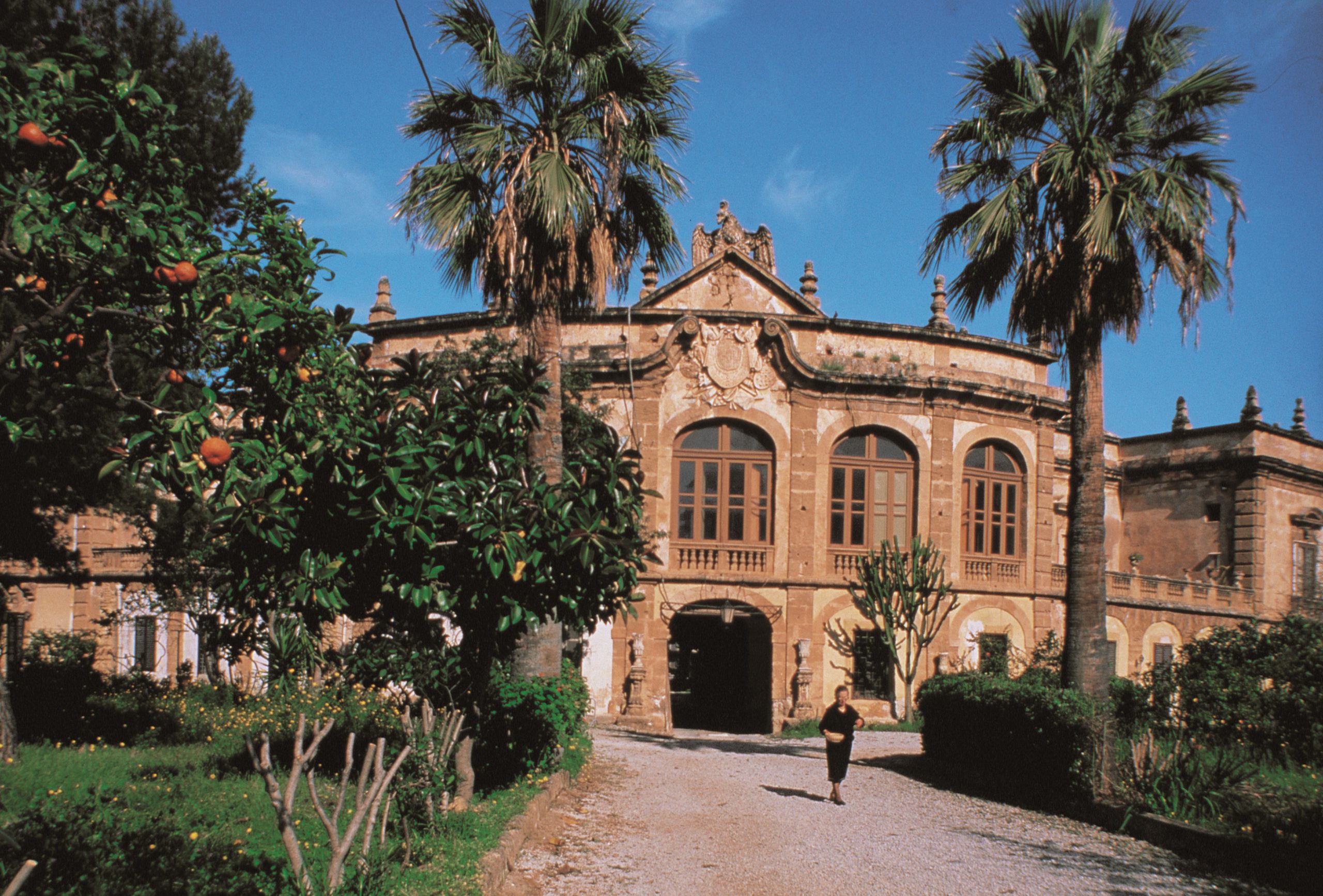
It is one of the most famous villas and tourist sites of eighteenth-century Sicily and such a superb and eccentric dwelling house that it was visited by illustrious travellers such as Goethe and Salvator Dalì. Its construction began in 1715 at the behest of Don Francesco Ferdinando Gravina and Cruyllas, the Fifth Prince of Palagonia, Peer of the “Kingdom of the Two Sicilies”, Knight of Golden Toson, the highest award of the King of Spain. The Dominican friar Tommaso Maria Napoli, who was assistant architect of the Senate of Palermo, was commissioned to design this holiday residence with the title of military engineer.Another great and esteemed Sicilian architect was appointed as a management partner of the works: Agostino Daidone. In 1737, with the succession of Ignazio Sebastiano Gravina, heir of the Father Francesco Ferdinando, in 1737 work began for the construction of the low bodies surrounding the villa. Instead the particular and eccentric decoration is due to the nephew of the founder, Francesco Ferdinando Gravina and Alliata. The start of the work on the construction of decoration is due to this Prince, the Seventh Prince of Palagonia who began in 1749 and completed the entire monumental complex of Villa Palagonia with such ornaments and internal and external furnishings that made his residence in Bagheria known worldwide as the Villa of the Monsters, so-called for the particular decoration that adorns the external walls of the low bodies, formed by statues in “tuff stone from Aspra”, depicting fantastic animals, anthropomorphic figures, statues of ladies and knights, musicians and various caricatures . The villa has an extraordinary unitary planimetric design, with all the elements that develop and act in a coordinated way with respect to the barycentric axis of the avenue. Very special is the double ramp staircase, made of limestone, under the magnificent princely coat of arms of the Gravina family. On the noble floor, it is accessed by an elliptical vestibule made with frescoes depicting the “labours of Hercules”, in homage to the new taste of the late eighteenth century, and painted by Salvatore Gravina, successor of his half-brother Francesco Ferdinando II. To its right the Gallery or “hall of mirrors” with the ceiling entirely covered by mirrors, with paintings depicting a balustrade with the sky above and fantastic birds. The walls of this large room are adorned with very fine marbles.